
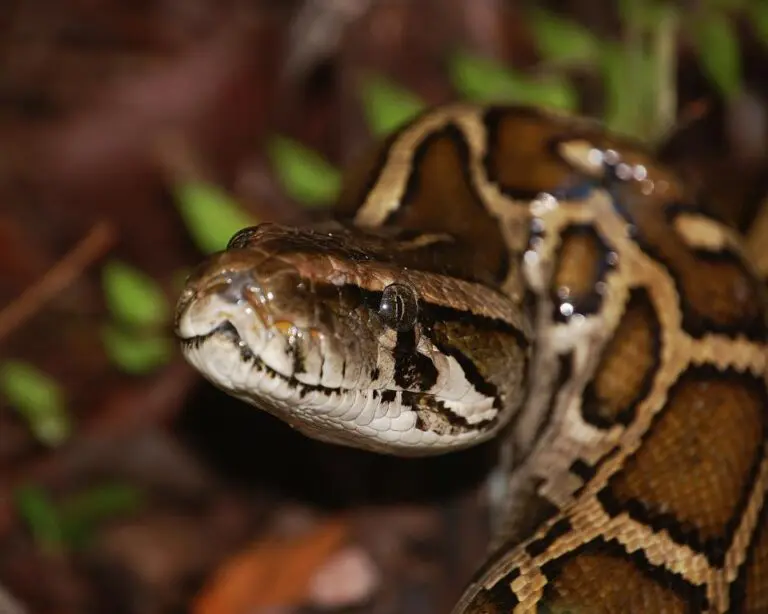
In June 2009, John Willson, Whit Gibbons, and I placed ten wild-caught male Burmese pythons from Everglades National Park into a semi-natural enclosure at the Savannah River Ecology Laboratory near Aiken, South Carolina.
At the time, climate-matching analyses using different approaches indicated that climate potentially suitable for Burmese pythons extended across much of the southeastern United States. One highly publicized study by Pyron and colleagues reached a much narrower conclusion, predicting little suitable habitat outside southern Florida and extreme southern Texas.
That analysis was subsequently shown to have major methodological problems. Four blood-python localities had mistakenly been treated as records for Burmese or Indian pythons, and the MaxEnt model was highly overfit and unstable. Removing only those four erroneous records radically changed the result, producing climate matches along the Gulf Coast and up the Atlantic Coastal Plain to North Carolina.
Even a well-constructed climate model, however, identifies only areas of potential climatic suitability. It cannot demonstrate whether animals from a particular population possess the physiology and behavior needed to survive there. We wanted empirical evidence of how pythons from the established Florida population would respond to a substantially colder environment.
The enclosure contained trees, brush piles, a pond, and four artificial underground refugia buried approximately one meter below the surface. Each python carried a radio transmitter and a temperature logger that recorded its body temperature every hour. We monitored their behavior and habitat use from summer into winter.
The pythons appeared to adjust readily to the enclosure. During summer, they spent much of their time in water and were seldom visible. As temperatures declined in autumn, they moved increasingly onto land, basked more frequently, and sometimes entered the underground refugia.
Then winter arrived.
The results are often summarized simply as “all ten pythons died.” All ten did die, but that simplified statement leaves out much of what the study revealed.
The snakes experienced 12 nights with air temperatures below 5°C (41°F) before any mortality occurred. Five died during the first subfreezing event, when the air temperature reached −0.4°C (31.3°F). Three had remained in relatively exposed terrestrial locations, and two had used the pond as a nighttime refuge. Four of the five survivors had used underground refugia that night.
Three additional pythons died over the next several weeks. Although they had regularly used the underground refugia, each died after emerging from—or failing to return to—one during freezing weather.
The final two pythons consistently used the underground refugia and eventually stopped emerging to bask as the weather became especially severe. They survived longer than the other snakes but died during an unusually cold and prolonged period in January. From January 1 through 14, minimum temperatures were below average on 13 of 14 days, only one night remained above freezing, and the lowest recorded air temperature was −9.2°C (15.4°F). Temperatures that low are very rare in the Coastal Plain of South Carolina.
The same regional cold spell reached southern Florida, causing conspicuous mortality among both native and nonnative animals, including American crocodiles, sea turtles, manatees, iguanas, and Burmese pythons.
Some people had also predicted that prolonged exposure to cold would cause respiratory infections—the “colds” often seen in captive snakes kept below appropriate temperatures—and that disease rather than cold exposure would kill our snakes.
That did not happen. Necropsies found no obvious evidence of disease. Veterinarians found no excessive mucus or other gross abnormalities in the respiratory tracts. The most likely causes of death were acute hypothermia or prolonged exposure to temperatures below the snakes’ thermal limits—not the chronic respiratory disease sometimes associated with cold stress in captive reptiles.
What did the study demonstrate?
It showed that pythons from southern Florida could withstand temperatures substantially colder than those they normally encountered in the Everglades. It also showed that survival depended on more than physiological cold tolerance. Refuge selection and thermoregulatory behavior were critically important.
What did it not demonstrate?
Ten translocated male pythons in one enclosure during one unusually severe winter could not define the species’ northern range. Our artificial refugia may not have provided the protection available in deeper animal burrows, stump holes, or other natural retreats. The study also did not test whether pythons could reproduce and maintain a self-sustaining population in South Carolina.
Our published conclusion was appropriately cautious, but based on these results, I remain convinced that some individual Florida pythons could survive an ordinary winter in the South Carolina Coastal Plain—particularly if they located deep, dry refugia and remained there during severe cold.
That is not the same as concluding that Burmese pythons could establish a self-sustaining population there. Individual survival, reproduction, population growth, and geographic spread are separate questions.
But the winter of 2009–2010 raised another question that became even more important later: when severe cold kills some pythons while others survive, does it create an opportunity for the population to evolve?
While our ten pythons were encountering winter in South Carolina, the same exceptional cold was testing the established population in the Florida Everglades. That will be the next part of this series on evolution after arrival.
References:
Dorcas, M. E., J. D. Willson, and J. W. Gibbons. 2011. Can invasive Burmese pythons inhabit temperate regions of the southeastern United States? Biological Invasions 13:793–802.
https://doi.org/10.1007/s10530-010-9869-6
Rodda, G. H., C. S. Jarnevich, and R. N. Reed. 2009. What parts of the US mainland are climatically suitable for invasive alien pythons spreading from Everglades National Park? Biological Invasions 11:241–252.
https://doi.org/10.1007/s10530-008-9228-z
Pyron, R. A., F. T. Burbrink, and T. J. Guiher. 2008. Claims of potential expansion throughout the U.S. by invasive python species are contradicted by ecological niche models. PLoS ONE 3.
https://doi.org/10.1371/journal.pone.0002931
Rodda, G. H., C. S. Jarnevich, and R. N. Reed. 2011. Challenges in identifying sites climatically matched to the native ranges of animal invaders. PLoS ONE 6.
https://doi.org/10.1371/journal.pone.0014670
#BurmesePython #InvasiveSpecies #InvasionBiology #NaturalSelection #ConservationBiology