Tantilla Consulting Insights banner featuring a green treefrog on a grayscale hand.

Insights on Science, Conservation, Writing, and Research

Practical perspectives on conservation biology, field ecology, invasive species, long-term research, scientific writing, grant strategy, and science communication from Michael E. Dorcas, Ph.D. Drawing on more than three decades of research, publishing, peer review, teaching, and consulting, these articles explore how science is done, how evidence is interpreted, and how research can be communicated clearly and effectively.

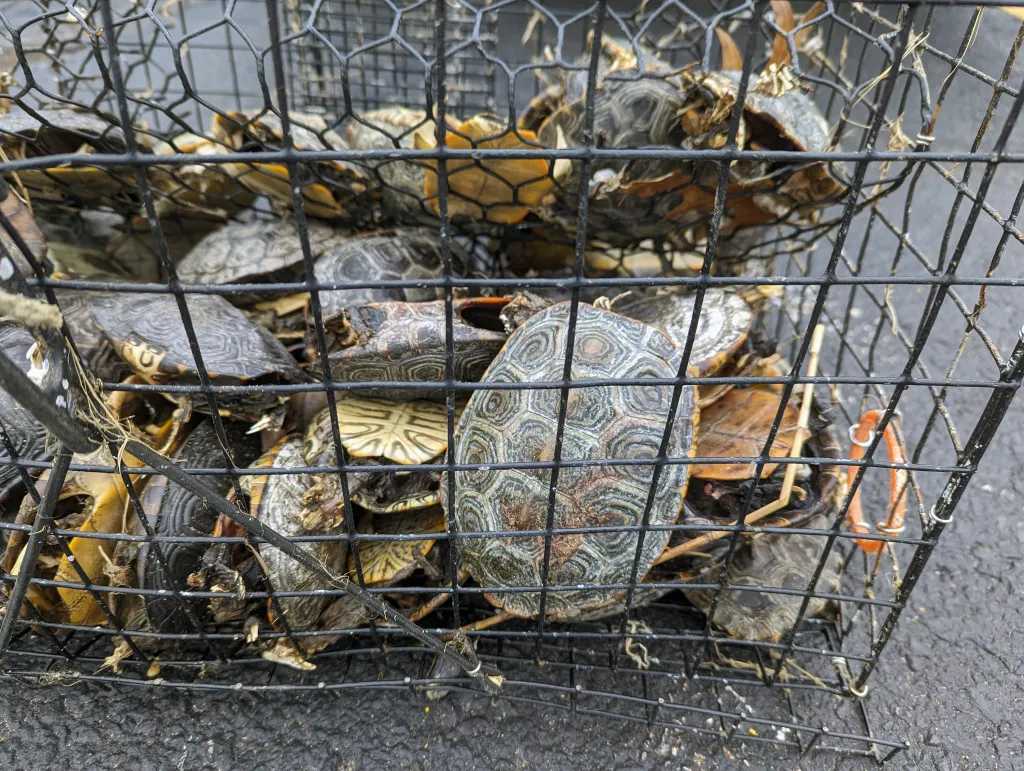
Dead diamondback terrapins trapped inside a wire crab pot. Crab pots can drown terrapins when they enter traps and cannot escape to surface for air.

Why Losing Adult Diamondback Terrapins Matters

Diamondback terrapins have a slow life-history strategy: high nest and hatchling mortality, delayed maturity, and long adult lifespans. That means crab-pot mortality of subadults and adults can have serious consequences for population stability.

Read Article
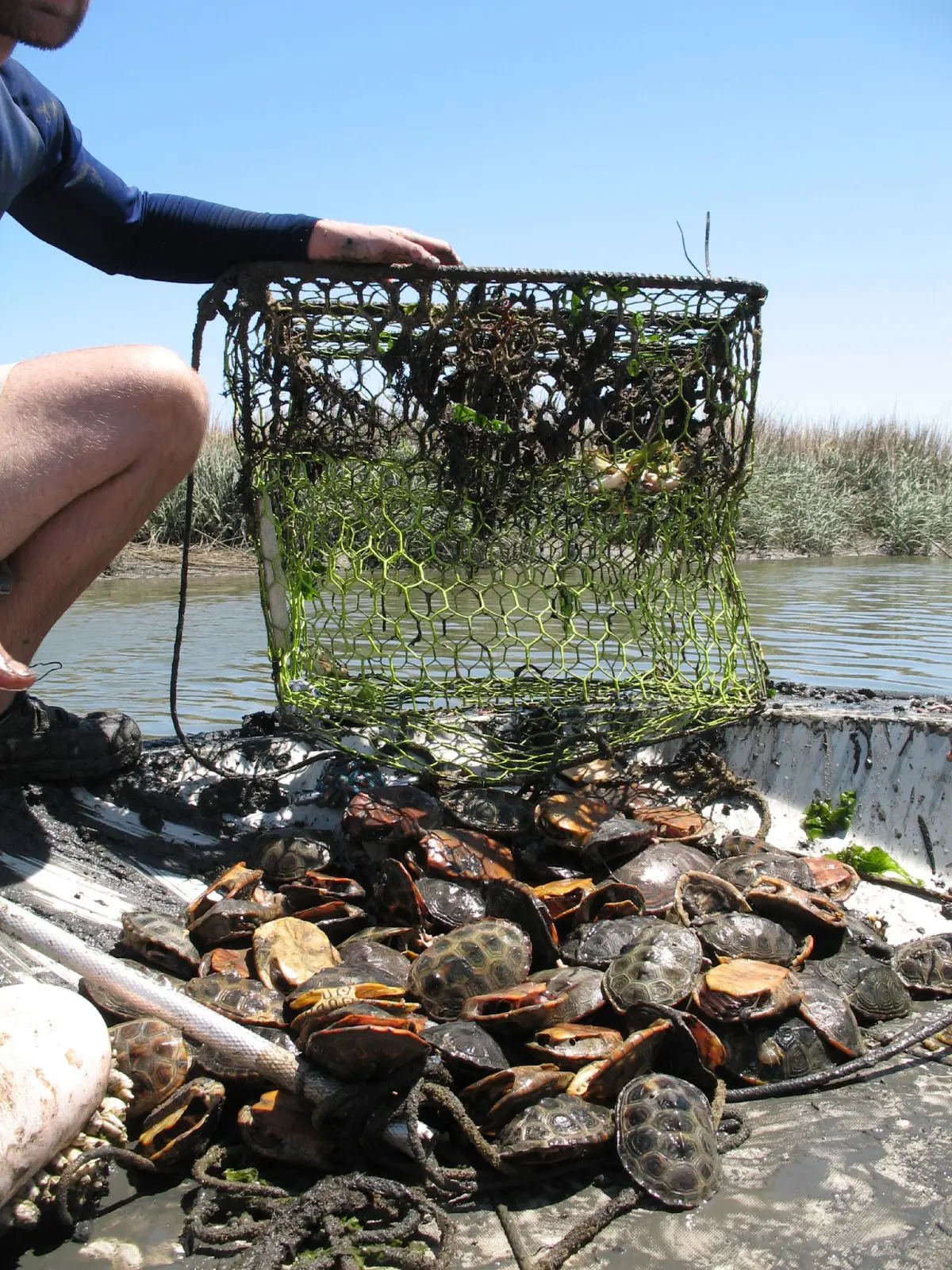
Dead diamondback terrapins removed from an abandoned crab pot in a Georgia tidal marsh.

One Crab Pot Can Doom a Terrapin Population

Sometimes the best bait for a turtle may be another turtle.That is not a management recommendation. It is a warning.Anyone who has trapped turtles for research has probably seen this. A turtle enters a trap, and soon other turtles are

Read Article
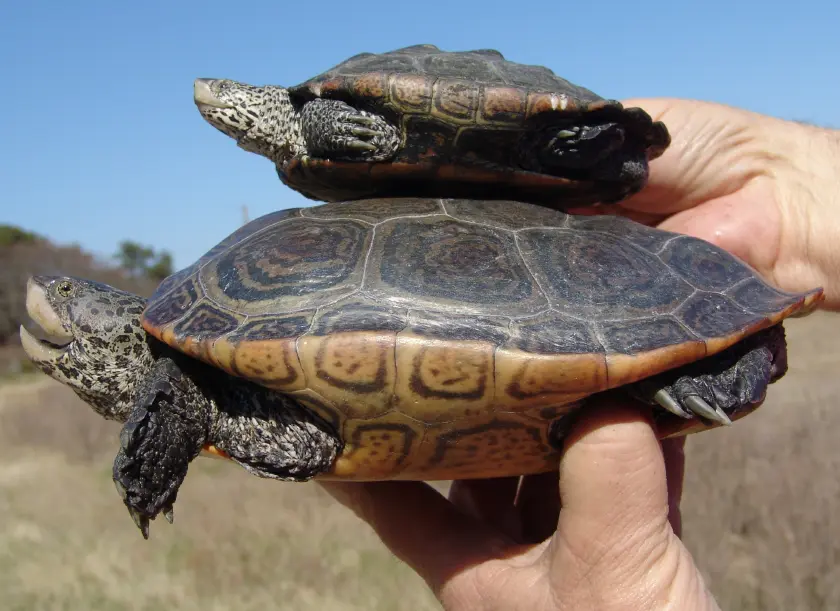
Adult male and adult female diamondback terrapins showing pronounced sexual size dimorphism.

Crab Traps Do Not Kill Terrapins Randomly

Crab traps do not kill terrapins at random. In 2007, John Willson, Whit Gibbons, and I used 21 years of mark–recapture data from Kiawah Island to examine why a diamondback terrapin population was declining. The answer was visible not only

Read Article
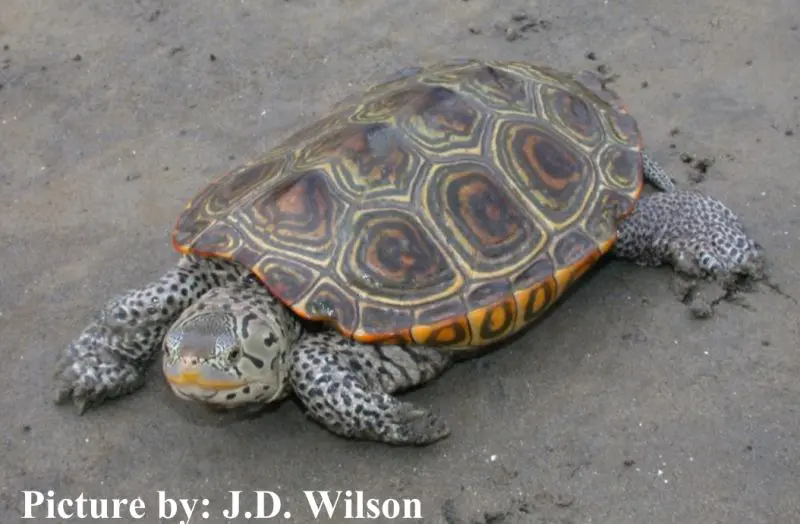
Adult diamondback terrapin on a sandy tidal creek bank at Kiawah Island, South Carolina.

A Turtle First Marked in 1986

In 1983, J. Whitfield “Whit” Gibbons began a long-term mark-recapture study of terrapins living in the tidal creeks around Kiawah Island.The project is still going.Kristen Cecala and Cris Hagen, who now lead the work, recently captured a female terrapin at

Read Article